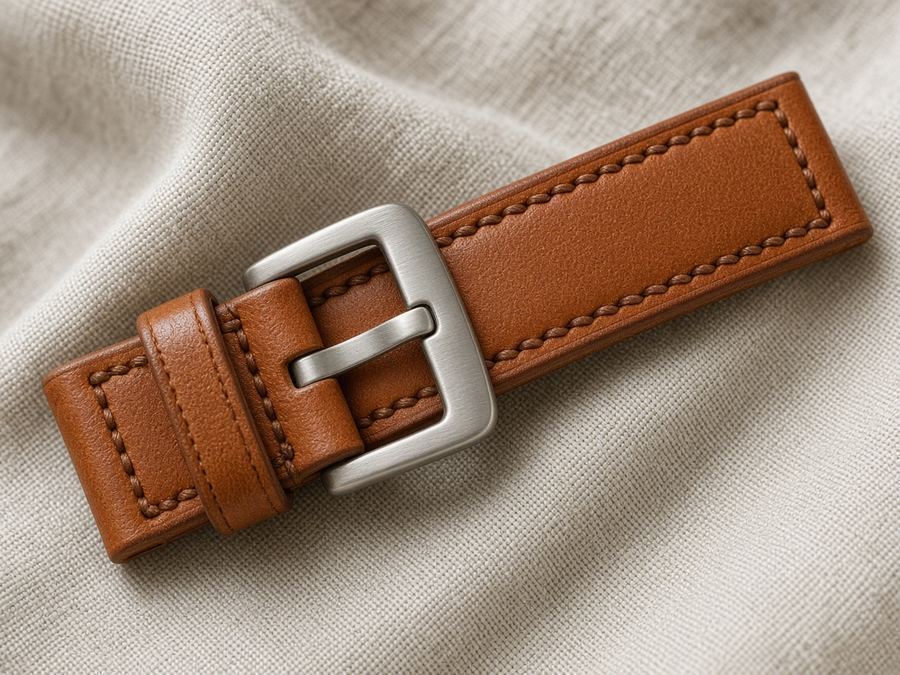
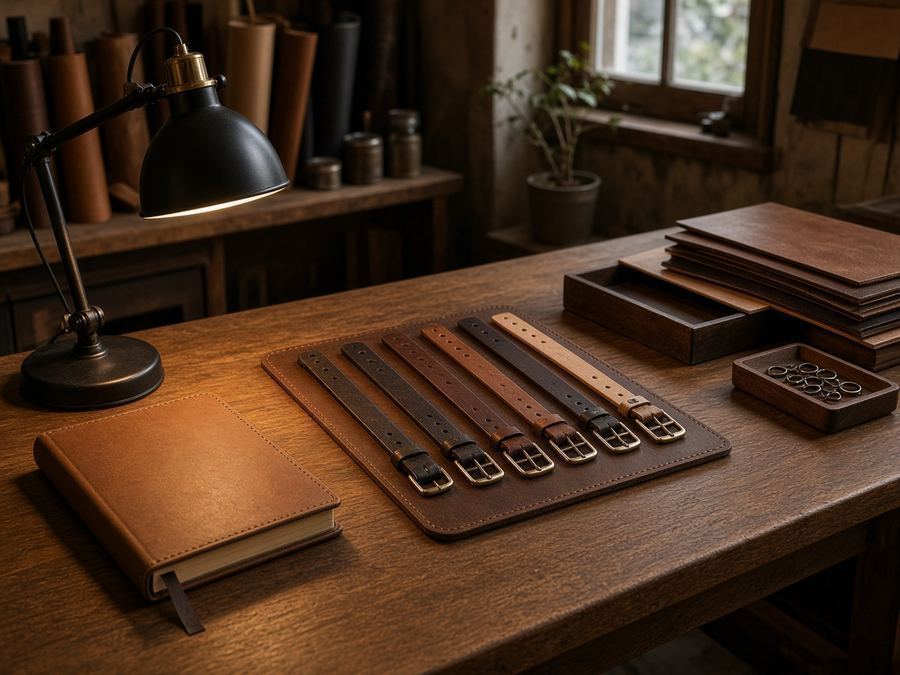
Chestnut quick-release
2.0 mm vegetable-tanned strap with contrast stitch and brushed hardware.
Strap atelier
We cut, stitch, and burnish straps to your lug width and wrist curve, then refine the buckle hole after a short wear check.
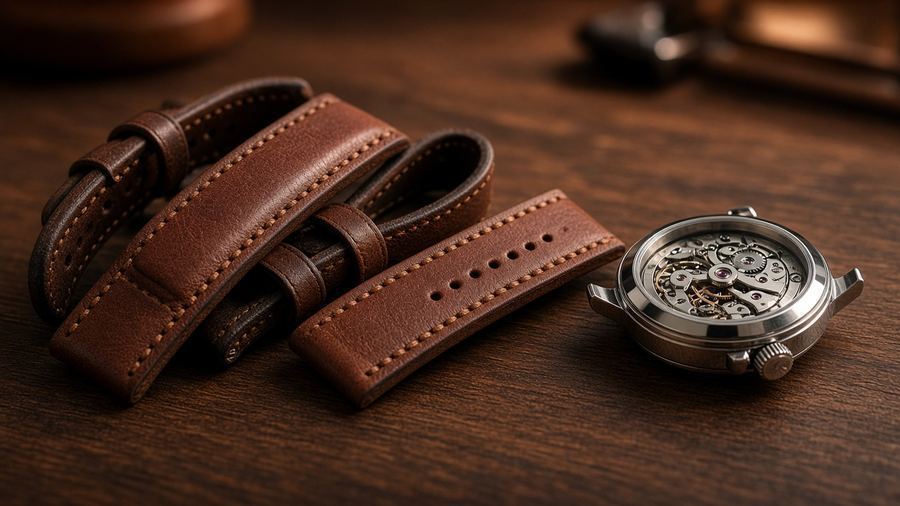
2.0 mm vegetable-tanned strap with contrast stitch and brushed hardware.
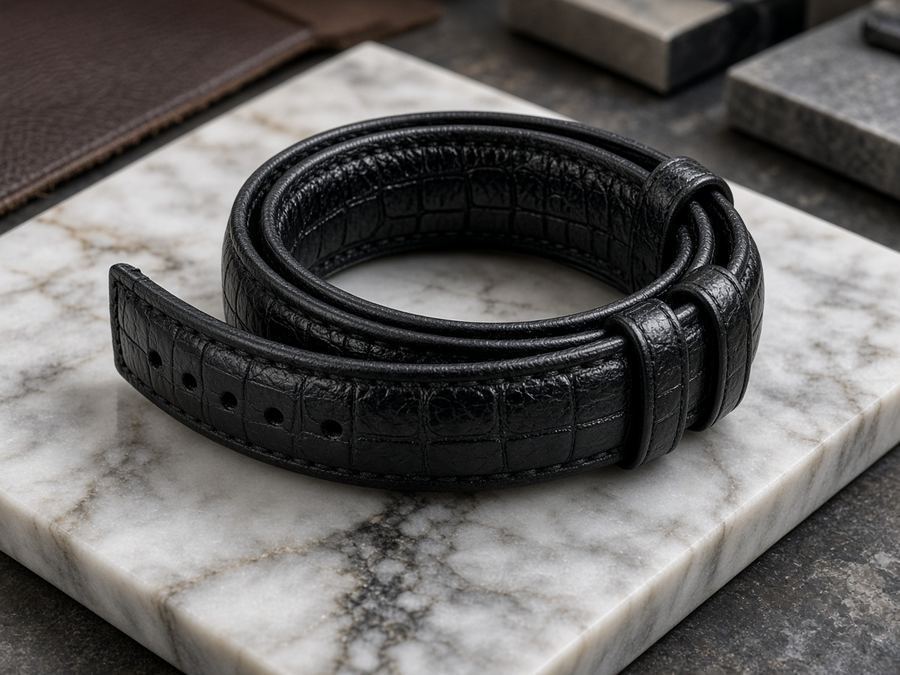
Perforated racing pattern on soft calf with reinforced keepers.
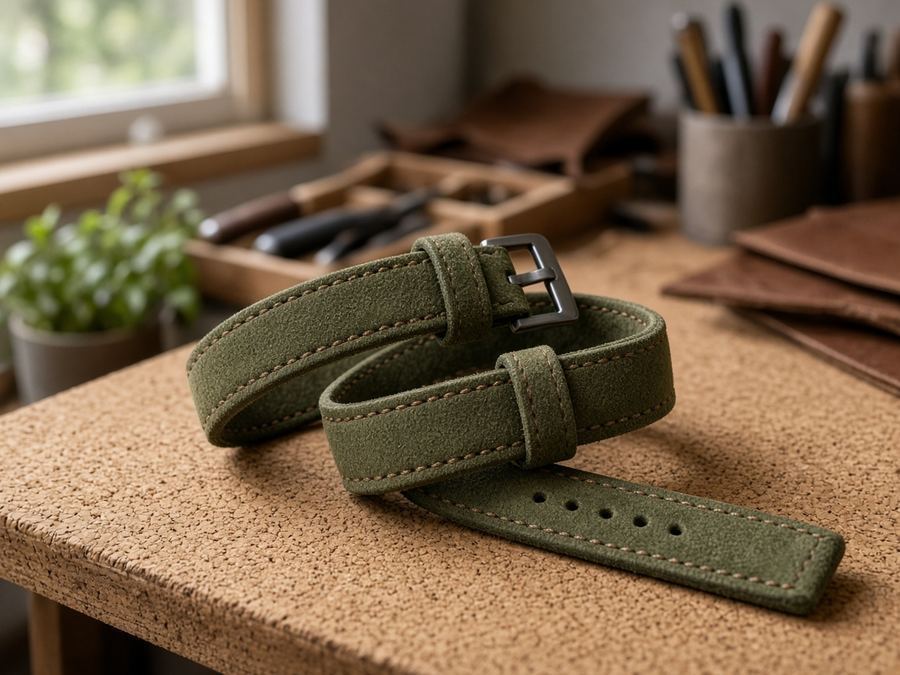
Suede face with smooth leather lining for all-day office wear.
★★★★★
The olive strap finally matched my 20 mm lugs without floppy keepers. The fit pass caught a hole that was one step too tight.
— Mateo L.
Most work sits between 18 mm and 22 mm. Odd sizes are possible when blank stock allows.
We re-stitch keepers and replace buckling ends when the leather body is still sound.
Standard turnaround is seven to ten working days after the planning session locks leather.
We record lug width, thickness, and wrist circumference with the watch on the bench.
You choose face leather, lining, and stitch color from swatches under daylight lamps.
Straps are cut in pairs, edges beveled, then saddle-stitched by hand.
Gum and heat smooth the edges so they resist fray at the buckle bend.
You wear the strap for a few days; we punch the final hole and adjust keepers if needed.
Juan Carlos Gómez 1388, 11000 Montevideo
Mon–Fri 10:00–18:00
Keeper loops are skived thin so they hug the strap without chewing the grain when you slide the buckle home.
Hole spacing starts from a mid wrist mark; we leave blank leather beyond the last punch until the fit pass confirms reach.
Quick-release spring bars are fitted only when lug drillings are clean—forced bars leave scars we refuse to hide with dye.
Suede faces get a light brush before handoff so nap direction matches across the pair.
Stitch length stays consistent at the buckle tongue where stress concentrates during daily on-off cycles.
Linings are cut slightly narrower than faces so edges can roll without a bulky ridge against the wrist bone.
Daylight lamps beat showroom spots for judging brown undertones that shift under office fluorescents.
We photograph finished pairs on a neutral card so you can compare later commissions without guessing dye lots.